
- Theatre and writing - by Benjamin Yeoh
- One writer and his dog - by David Eldridge
- Fin Kennedy - by, er, Fin Kennedy
- New in Town - by Lance Woodman.
Thursday, November 30, 2006
Blogging playwrights
For your consideration, as they say in Hollywood, some new (to me) blogs by playwrights:


Remembering St Elsewhere
As a new DVD set is released, David Browne in The New York Times reflects on the significance of St Elsewhere.
Once upon a time in network television, hospitals were reassuring places: clean, well-lighted fortresses where one could be comforted by cheery nurses and treated by doctors either grandfatherly...or blandly strapping... These days the TV hospital is anything but a sanctuary. As “ER,” “House” and “Grey’s Anatomy” attest, assaults and bombings are as common as operations, and the staff members are as likely to be dissecting one another’s sex lives as tending to patients.
The missing link between medical shows then and now was “St. Elsewhere,” which ran from 1982 to 1988 on NBC and whose first season will be released on DVD this week. In the series, set in the shabby St. Eligius hospital in a destitute section of Boston, everything was in hectic, chaotic motion. Doctors, nurses and sometimes patients crossed paths or nearly collided in the corridors; files always seemed to be spilling onto floors.
Wednesday, November 29, 2006
Five writers: one play
It might not be the sexiest word in the English language, but just now "collaboration" has British theatre buzzing. Directors are collaborating with artists, musicians and choreographers to create work that is experimental and vibrant. Actors are seizing control of the stage and devising work themselves. About the only people who aren't doing much collaborating are playwrights.More from Maddy Costa in The Guardian.
Which is why Catch, a new play by five writers opening this week at the Royal Court in London, is such a tantalising prospect. Working together wasn't their idea. As one of them, April de Angelis, puts it: "Nobody would seriously think: 'What a good idea, to write with four other people.'" The idea was suggested by Ian Rickson, outgoing artistic director at the Royal Court. It came to him when raking through the theatre's archives for the theatre's 50th anniversary. A similar collaboration took place at the Court in 1971 between seven young men, including David Hare, Howard Brenton and Stephen Poliakoff. The group's aim then was to break out of fringe theatres into "establishment" spaces. The play, Lay By, succeeded in kickstarting their careers.
Tuesday, November 28, 2006
Tensions in Hollywood
In a development that underscores the deteriorating state of labor relations in Hollywood, the chief negotiator for the major studios Monday accused the union that represents TV and film writers of jeopardizing production by rejecting his request to enter early contract talks.More from Richard Verrier in The LA Times.
J. Nicholas Counter, president of the Alliance of Motion Picture Television Producers, said his offer to begin negotiations in January had been spurned by David Young, executive director of the Writers Guild of America, West. Instead, Counter said, Young proposed beginning talks in September, just before the writers' contract expires Oct. 31.
"We've been rebuked," Counter said.
There's no comment yet from the WGAw.
Getting Perfume on screen
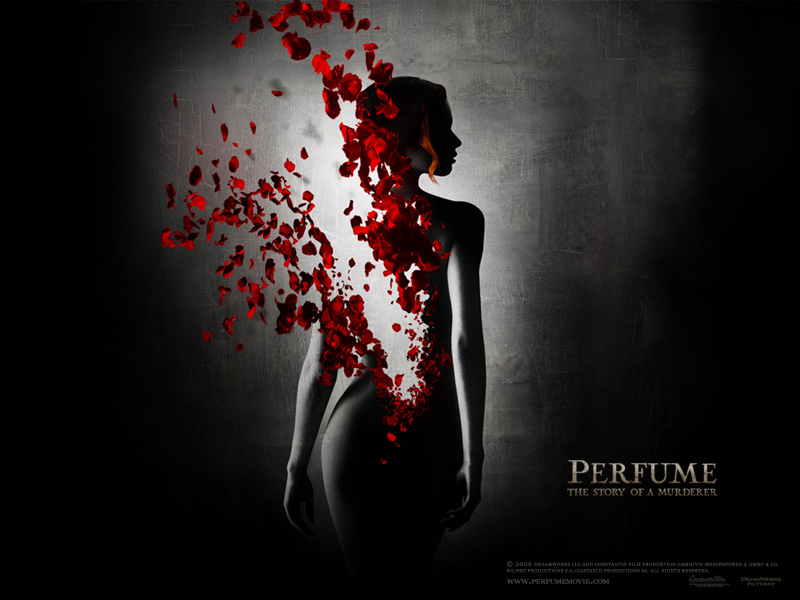
"Perfume: The Story Of A Murderer,” Patrick Süskind’s seductive novel about the power of scent, was first published in Germany and went on to sell 15 million copies around the world. For its many fans the evocative tale lingered like the bottom note of a fragrance. But it took 21 years to find its way onto screens.More from Coeli Carr in The New York Times.
Monday, November 27, 2006
Mark Ravenhill's Dick Whittington

Playwright Mark Ravenhill wants to make one thing clear: "The posters for Dick Whittington say it's a family pantomime, and that's exactly what it is." Ever since it was announced that the 40-year-old author, whose 1996 debut Shopping and F***ing was full of explicit sex and violence, would be writing a Christmas panto, he's been plagued by innuendo."More from Aleks Sierz in The Telegraph.
"I've been harassed by all these media types," says Ravenhill, "saying nudge, nudge, wink, wink, I bet it's got anal sex in it. Well, actually, no it hasn't. It's a family pantomime.
Update: More from Ravenhill in The Guardian.
Another update: Still more in The Independent.
Children's BAFTAs
The winners of the BAFTA awards for Children's TV and film were announced last night. Notable winners included:
 The Amazing Adrenalini Brothers: Directed by Dan Chambers and Claire Underwood, written by Mark Huckerby and Nick Ostler)
- Best Animation: The Amazing Adrenalini Brothers (written by Mark Huckerby, Nick Ostler)
- Best Pre-School Animation: Pocoyo (written by P. Kevin Strader and
Andy Yerkes) - Best Drama: The Giblet Boys (written by Nick Fisher)
- Best Feature Film: Wallace And Gromit: The Curse Of The Were-Rabbit (written by Nick Park, Bob Baker, Steve Box, Mark Burton)
- Best Writer: Peter Tabern (Johnny And The Bomb, based on the book by Terry Pratchett).
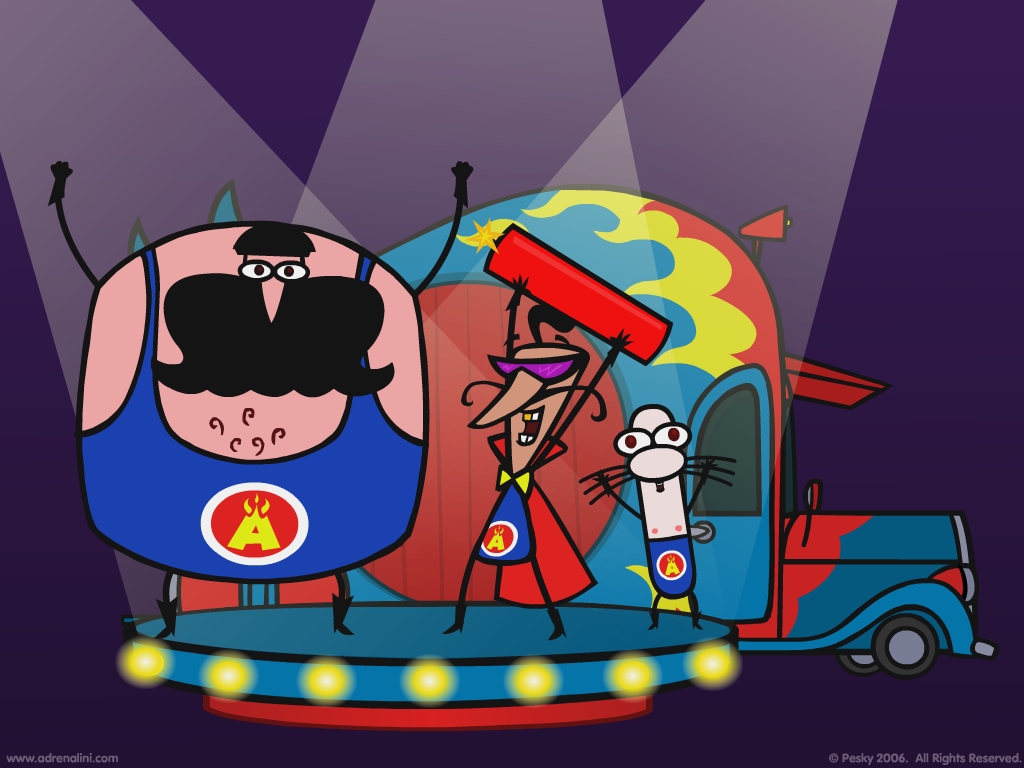 The Amazing Adrenalini Brothers: Directed by Dan Chambers and Claire Underwood, written by Mark Huckerby and Nick Ostler)
Theatrevoice.com
Theatrevoice.com hosts an extensive archive of articles and broadcast interviews about theatre.
Thanks to Maxie Szalwinska in The Guardian for the link.
Thanks to Maxie Szalwinska in The Guardian for the link.
Nimer Rashed wins Ustinov award
British writer Nimer Rashed has won the 2006 Sir Peter Ustinov Television Scriptwriting award for his script The Great McGinty. The award, run by the organisation behind the Emmy's, is open to non-US citizens living outside the US who are under 30.
In addition to receiving a cheque for $2,500, Nimer's script will be performed by a group of professional New York actors at the International Emmy World Television Festival before an audience of worldwide television executives.
In the early 90s Nimer acted professionally on stage and screen. In 2006, his play Itchycoo Park won 2nd place at Soho Theatre’s Westminster Prize and was performed at the theatre. He has had further readings at the Soho Theatre, and is currently on the Young Writers Programme at the Royal Court. His fiction has appeared in Transmission and on Pulp Net.
In addition to receiving a cheque for $2,500, Nimer's script will be performed by a group of professional New York actors at the International Emmy World Television Festival before an audience of worldwide television executives.
In the early 90s Nimer acted professionally on stage and screen. In 2006, his play Itchycoo Park won 2nd place at Soho Theatre’s Westminster Prize and was performed at the theatre. He has had further readings at the Soho Theatre, and is currently on the Young Writers Programme at the Royal Court. His fiction has appeared in Transmission and on Pulp Net.
Friday, November 24, 2006
Unsolicited material welcome
If you're looking for somewhere to send a screenplay, writer and blogger Danny Stack has put together a list of companies who say they'll read it.
Betty Comden obituary
Betty Comden, who with her longtime collaborator Adolph Green wrote the lyrics and often the librettos for some of the most celebrated musicals of stage and screen, died yesterday in Manhattan. She was 89 and lived in Manhattan...More from Robert Berkvist in The New York Times.
During a professional partnership that lasted for more than 60 years, and which finally ended with Mr. Green’s death in 2002, the Comden-Green blend of sophisticated wit and musical know-how lit up stage shows like “On the Town,” “Wonderful Town,” “Peter Pan” and “Bells Are Ringing.” Their Hollywood credits included the screenplays for two landmark film musicals, “Singin’ in the Rain” and “The Band Wagon.”
Musicals and syphilis
Evening Standard critic Kieron Quirke sees encouraging signs for new playwrighting:
It seems serious plays are being outdone by musicals as never before in the West End...This is a great thing. The two golden periods of the commercial musical, which we might name separately after Rodgers and Hammerstein and Andrew Lloyd Webber, both preceded similarly gilt eras for British new writing, respectively the English Stage Company’s revolution of the 50s and the ‘in yer face’ revival of the 90s. You have to overdose on sugar before you get the insulin.
But my second submission is stronger still. Syphilis is back! Incidents are up nearly 3000% since the early 90s. History has taught us one thing: where syphilis goes, great literature follows, and theatre in particular sees a benefit.
Thursday, November 23, 2006
A screenwriters' roundatble
When a round table of screenwriters assembled at the swanky Viceroy hotel in Santa Monica back in May to look over the "Transformers" screenplay, it may not have had the solemn purpose of King Arthur's knightly conferences nor the savage wit of Dorothy Parker's vicious circle, but it did portend something significant.More from Jay A. Fernandez for the LA Times.
While bringing in a group of writers to brainstorm on a project is relatively common in television and feature comedies and animated films, especially early in the development process, big studio action movies like this one — born of the original mid-'80s television cartoon series — rarely get this kind of treatment.
Abi Morgan interview
In The Guardian, Gareth McLean talks to Abi Morgan about her new TV film, Tsunami: The Aftermath.
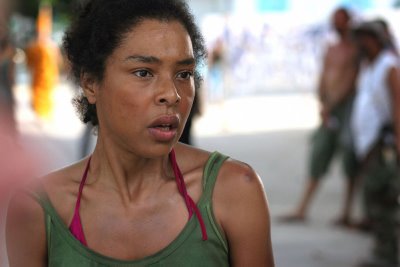 Sophie Okonedo in Tsunami: The Aftermath, written by Abi Morgan, directed by Bharat Nalluri. Photo by Kerry Brown for BBC/Kudos Film and Television
Morgan spent 10 days in Thailand researching the project, speaking to hundreds of people, in NGOs and the Thai government. Would she describe Tsunami: The Aftermath as a docudrama? "When I think of docudrama, I think of timelines flashing up on the screen and often more sketchily written characters. Part of the need and the desire to make Tsunami a fiction was that you can't do justice to an individual story. You can't fulfil what someone would want you to, so I told an amalgam of stories. But there's nothing in there that isn't based on fact, even the most shocking events."Tsunami: The Aftermath is on BBC2 on Tuesday November 28.
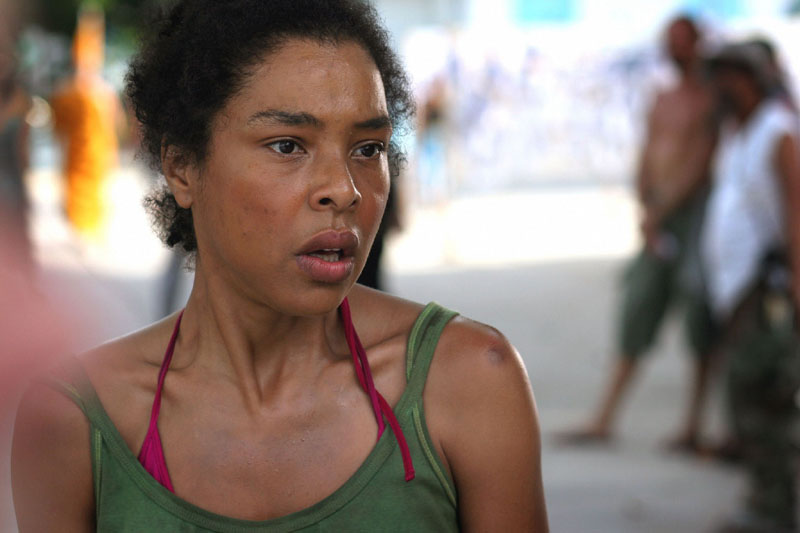 Sophie Okonedo in Tsunami: The Aftermath, written by Abi Morgan, directed by Bharat Nalluri. Photo by Kerry Brown for BBC/Kudos Film and Television
Wednesday, November 22, 2006
RSC backs new writing
The Royal Shakespeare Company, keeper of the flame of the greatest playwright ever, plans to "knock Shakespeare off his podium", according to artistic director Michael Boyd, by increasing the proportion of new plays it stages to half of its total work.More from Charlotte Higgins in The Guardian.
"What is distinctive about the Royal Shakespeare Company is the relationship between the Renaissance and writing now," said Mr Boyd. "What excites me is the tension line between the 16th century and the present. New plays are more important than classical revivals."
The playwrights Marina Carr, Leo Butler and Roy Williams have all been recently commissioned by the RSC. But in a more far-reaching move, writers will be "embedded" within the company. The first of these, Adriano Shaplin, will be working with the actors who are preparing Shakespeare's history plays, all eight of which will be in the repertoire by spring 2008. The idea is for authors to write plays with a specific ensemble in mind, just as Shakespeare did. "It's a radical idea; but it is also our heritage," Mr Boyd said.
New Welsh theatre company
Wales’ new theatre company, created by the merger of Sherman Theatre with Sgript Cymru, has appointed former Arts Council of Wales chief executive Emyr Jenkins at its first chairman and Chris Ricketts as its inaugural director.More from Alistair Smith in The Stage.
The pair will lead the organisation, currently trading as the Contemporary Theatre and New Writing Company, when it becomes fully operational from April 1, 2007.
Tuesday, November 21, 2006
British shows win at International Emmy's
British drama and comedy had a good night at the International Emmy Awards in New York. British winners included:
 Lenora Crichlow and Olivia Hallinan in Sugar Rush, written by Katie Baxendale, based on the novel by Julie Burchill
- Children And Young People: Sugar Rush, written by Katie Baxendale, based on the novel by Julie Burchill
- Comedy: Little Britain, written by Matt Lucas and David Walliams
- Documentary: Hiroshima, written and directed by Paul Wilmshurst
- Drama Series: Life On Mars, created by Matthew Graham, Ashley Pharoah and Tony Jordan.
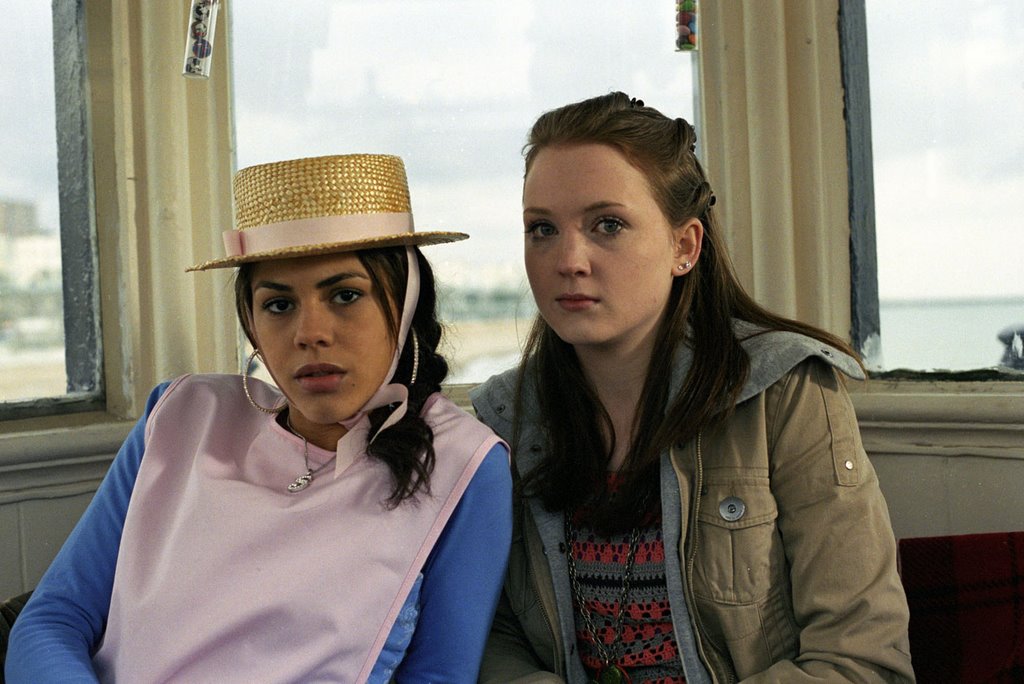 Lenora Crichlow and Olivia Hallinan in Sugar Rush, written by Katie Baxendale, based on the novel by Julie Burchill
Nelson S Bond obituary
Although his name has since slipped from recognition, Nelson S Bond's byline on a magazine was a guarantee of a good story in the 1930s and 1940s. A prolific and often humorous writer, Bond, who has died at the age of 97, was at his best with the short story, once explaining: "One of my axioms of writing has always been that good stories are not written - they're rewritten. I would talk a story into the dictaphone, Betty [his wife] would type it, then I would revise it. The story had to be packed tight together. So I was fair at 10,000 words, good at 5,000 words, and excellent, sometimes, at 2,500. The shorter the Bond, the better the story."More from Steve Holland in The Guardian.
BBC Vision launched
Jana Bennet, the BBC's Director of Vision (really!) has launched BBC Vision, "the biggest integrated multimedia broadcast and production group of its kind in the world."
The press release states that BBC Vision is "so called because it makes BBC content that people watch".
It brings together several former BBC divisions: Drama, Entertainment and Children's; Factual and Learning; Television; and Network Production in the Nations.
This follows a restructure plan announced by BBC Director-General Mark Thompson earlier this year.
"Our creative purpose is to deliver great programmes and great content to all our audiences… The future will still be a place where audiences value great storytelling, elegant structure, high production values – all the traditional strengths of BBC programme makers. But at the same time we need to develop fresh ways of thinking and using technology. There are incredible opportunities in this new world if we can only organise ourselves to seize those opportunities and make them work for our audiences."
The press release states that BBC Vision is "so called because it makes BBC content that people watch".
It brings together several former BBC divisions: Drama, Entertainment and Children's; Factual and Learning; Television; and Network Production in the Nations.
This follows a restructure plan announced by BBC Director-General Mark Thompson earlier this year.
Bradwell leaves The Bush
Mike Bradwell has announced that he will step down as artistic director of The Bush Theatre next year, after more than ten years in the job...The Bush’s board will shortly be advertising for a replacement artistic director to lead the theatre’s planned move into a larger building.More from Nuala Calvi in The Stage.
Subscribe to:
Posts (Atom)


