Friday, January 12, 2007

Gwyneth Hughes interview

After two high profile true-life dramas for ITV (Cherished and Mysterious Creatures) Gywneth Hughes is one of the hottest TV drama writers around. Her new five part serial for BBC and HBO, Five Days, which starts in the UK on 23 January, looks set to confirm her status. I spoke to her earlier this week about Five Days and how her background as a documentary maker has informed her writing.
Can you describe your approach to writing an original story? Do you plot it all out first?

I don’t plot it out at all. I’m not sure how unusual that is but I do very little storylining. I have an idea about the story and an almost musical sense of what key it’s in and what the emotional temperature will be. But when I wrote the first episode of Five Days I had no idea what would happen in the subsequent four. I can do storylining – I had to when I wrote on The Bill – but I invariably throw it out once I start writing so there’s not much point. Stephen King talks about writing being almost like archaeology, where it feels as though you’re excavating a story that already exists, and that’s how it seems to me.
Five DaysFive Days: written by Gwyneth Hughes, directed by Otto Bathurst and Simon Curtis.

Bernie Corbett: The year ahead

On the Writers' Guild website, General Secretary Bernie Corbett looks at work the Guild will be tackling in 2007.
The most important upcoming work is the renegotiation of the main BBC TV Drama Agreement. The livelihoods of many Guild members are dependent on the minimum rates and terms in this document and, with digital content and new media to be included, the negotiations will be more significant than ever.

Potter fanfic-er gets her own deal

The debut novel from a Chilean writer who shot to fame after writing her own "fanfic" version of JK Rowling's Harry Potter stories has been released.

La Septima M - The Seventh M - is the first of three books that 23-year-old Chilean journalism student Francisca Solar was contracted to write by publishers Random House, following the online success of her unofficial sixth Harry Potter story, Harry Potter and the Decline of the High Elves.
More from BBC News.

Thursday, January 11, 2007

Costa winners

Tenderness of WolvesAmong the winners of the Costa Book Awards (formerly the Whitbread Awards) announced yesterday was Stef Penney, as Nigel Reynolds reports in The Telegraph.
The most surprising story thrown up by the awards is that of 37-year-old Stef Penney, a film writer, whose debut novel, The Tenderness of Wolves, won this year's first novel award. A story of mystery, love and murder in a remote snow-bound settlement in northern Canada in the 1860s, it was praised by judges for its description of a deep winter landcsape.

But Penney, who lives in East London, disclosed today that she had never visited Canada. Because she had suffered from agoraphobia for 15 years, she had a fear of travelling and built up her picture of the country by reading the first-hand accounts of settlers, trappers, explorers and men of the Hudson Bay Company, in the reading room at the British Library.

She said: "I didn't like public transport and to begin with I had to go by car to the British Library. But parking was so expensive that I was forced to overcome my fear of travelling by bus."

The book was turned down by "quite a lot" of publishers, she said before it was picked up by the small house, Quercus. She said of her win today: "It's really hard to believe - it's extraordinary."

An end to the longest literary feud?

One of the world's iciest literary feuds, sealed with a punch-up in a cinema 30 years ago, is thawing as Colombian Nobel prize winner Gabriel GarcĂ­a Marquez and Peruvian writer Mario Vargas Llosa prepare to publish together.
More from Giles Tremless in The Guardian.

Docudrama rates

All of the Guild's major TV agreements are likely to be renegotiated this year and one subject certain the be discussed is the rates paid for the drama element of docudrama. On the Guild's website, J.C. Wilsher and Isabelle Grey set out the arguments for drama in docudrama to be included in the minimum terms agreements.
Writers of TV drama should be getting TV drama rates and terms, whether they are commissioned by a drama or a factual department. Of course there may be ‘discounts’ from the full original drama rate – the dramatised sequences may only be a portion of the programme’s running time; storyline and underlying source or research material may have been provided.

Wednesday, January 10, 2007

Guillermo del Toro interview

Denis Faye talks to Guillermo del Toro for the Writers Guild of America, west.
You often give your characters comprehensive biographies before you even start writing. How comprehensive?

I like to know where they're coming from, what the story is with their parents, with their wife, with their children, why they were raised in a certain way. But with some movies I do it and some movies I don't. In Devil's Backbone, I did very extensive biographies. In Hellboy, I did very extensive biographies. In this one I didn't. I really knew who I was using as model for each character. I knew the person very well. I knew who I was targeting, and I just used that base to write them. I mean, I don't know any fascist Captains [like Captain Vidal], but I know people who have the same sociopath impulses as he does.

Tuesday, January 09, 2007

Sobol Award cancelled

The Sobol Award, a controversial new literary contest that offered agentless writers a $100,000 first prize and a contract with Simon & Schuster for the top three winners, has been canceled.

Officials acknowledged that the prize's entry fee and other contractual requirements had deterred would-be participants.

"No further manuscript submissions will be accepted," award organizers announced Monday on the Sobol Web site (http://www.sobolaward.com). "All writers who have submitted manuscripts will receive a full refund of their entry fee ($85) and our copies of the manuscripts will be destroyed and deleted from our system."
More from Hillel Italie for Associated Press.

The Trial Of Tony Blair

In the dock: Robert Lindsay as Tony Blair

The Trial Of Tony Blair, written by Alistair Beaton, will be the latest current affairs based drama to hit our TV screens when it appears on More 4 on Monday. There are interviews with Beaton and executive producer David Aukin in The Telegraph and Media Guardian (free registration required).
"The drama focuses on Blair's psychic disintegration because he can't silence his conscience over what happened in Iraq. It's based on the assumption that Blair is a man with some remaining decency and conscience and that the death of people in Iraq must haunt him," says Beaton. Indeed, the film's first scene finds Blair at confession (did I mention that he's recently, and to Cherie's delight, become a Catholic?), telling the priest: "I feel as though I have sins to confess. Mortal sins."

Monday, January 08, 2007

The slow birth of Lilies

Lilies, which begins on BBC One on Friday, spent almost a decade in development - as the series creator Heidi Thomas tells Paul Hoggart in The Times.
"The series is really a mosaic of oral history," says Thomas, and proceeds to itemise the origin of the colourful details with which the script is stuffed. Dadda’s hostility to his daughters’ priest, for instance: "My grandmother was Catholic and my grandfather was Protestant. When the priest called round every Friday, he would make him stand on newspaper just to show he didn’t approve of him being in the house. One of his daughters married a Catholic and he was just referred to as ‘the Fenian’. It was only when a cousin took up genealogy that we found out what the poor man’s name was."
Catherine Tyldesley, Daniel Rigby, Brian McCardie, Leanne Rowe and Kerrie Hayes in Lilies, created by Heidi Thomas, written by Heidi Thomas, Kate Gartside and Jonathan Harvey. (Photo: Matt Squire for BBC/World Productions)

Second productions

In The Guardian, Mark Ravenhill reflects on the difficulty of getting a second domestic production for a new play.
This absence of second productions is in some ways a good thing. It reflects the confidence of theatres outside London - and of arts organisations in general. Recent research, carried out by the TV channel Artsworld, found that London was only the ninth best city in the country for the arts, with Newcastle top. A few decades ago, theatres would have looked to see what were this year's hits in the capital, then dutifully produced them - but not now. Theatres in Liverpool, Southampton, Plymouth, Manchester or Birmingham have their own commissions and produce their own premieres. Every week sees a slew of new plays appearing across the country, often sparsely reviewed in the national press.

We have now created a situation in which there is a demand for hundreds of premieres across the country every year, often in studio theatres. But there is no promise of subsequent productions. Writers - realising there is very small financial reward for this, and small audiences - are soon lost to television and film.

Books by committee

Working Partners, a company that uses teams of editors and writers to create series fiction for children, is moving into the grown-ups market, reports Brandon Robshaw in The Independent.
Like it or not, this appears to be the future of commercial fiction. It's linked with the growing professionalism of writing, a trend that has seen degree courses in creative writing mushrooming in universities all over the country, with the Open University joining in last year.What is wrong with giving the reading public what it wants? Working Partners isn't perverting or corrupting public taste, but providing well-crafted, popular commercial fiction.

Friday, January 05, 2007

Do non-American writers have to join the WGA?

On his Artful Writer blog, Craig Mazin advises non-American writers who are working in the USA.

Kimberly Lofstrom Johnson: Curve

Woman-in-jeopardy thrillers have long been a popular staple of cinema. The terror the audience experiences while watching a vulnerable woman suffer through a horrible situation — "Wait Until Dark," "Alien," "High Tension," Emma Thompson in "Junior" — provides just the kind of visceral (and often perverse) pleasure we want from the movies.

Since these suspenseful films are almost uniformly written by men, though, the scenarios tend to play out as fantasies of either the malicious male subconscious or a romanticized version of a besieged woman's fortitude under extreme duress. Screenwriter Kimberly Lofstrom Johnson hopes to challenge this convention with her recent addition to the genre, "Curve." Her script doesn't veer from the genre's essential plot elements but lurches through a stripped-down narrative invested with both a specifically feminine mind-set and a harrowing, if unintended, subtext.
More from Jay A. Fernandez in The LA Times.

Agency prize for MA students

Students on City University's MA in Creative Writing (Novels) course are being offered the chance to win £1,500 and representation from the Christopher Little Literary Agency (CLLA) in a new competition.

CLLA are best known for picking up JK Rowling's work after it had been turned down by several other publishers and agents. So they probably have £1,500 to spare.

With the growth in creative writing MAs, could this be the first of many tie-ups with agencys or producers?

Thursday, January 04, 2007

Drama Association of Wales - One Act Playwriting Competition

The Drama Association of Wales have launched their One Act Playwriting Competition 2007. The competition aims to encourage the writing of plays for amateur theatre in English and Welsh.

For 2007, they are seeking plays in three categories; an Open Section, plays suitable for performance by a cast of 16-25 year olds, and the best play in the Welsh language. In addition to cash awards, prize-winning plays will be published. Previous prizewinners have been published and performed as a result of promotion through their New Writing Scheme.

The deadline is 31 January 2007.

More details are available from the BBC Writersroom.

Boxing as art

In The Guardian, Marcel Berlins reflects on why boxing should have inspired so many great novels.
But why boxing? For one thing, a one-versus-one struggle lends itself perfectly to a good-versus-evil theme. It is the ultimate elemental sport, not dependent on artificial appendages like balls, rackets or bats, nor on the help of team-mates. Physical suffering is integral: it is the only sport specifically aimed at inflicting and receiving pain (which is perhaps why you "play" cricket, tennis, football etc but you do not play boxing). In social terms, boxing is the sport that allowed the uneducated poor, the shabby immigrant and the racially discriminated against to rise, not just to the top of their sport, but of their society and nation. And within boxers and the boxing milieu you find most of the emotions and tensions that make stirring literature.
Million Dollar BabyHilary Swank in Million Dollar Baby, screenplay by Paul Haggis from stories by F.X. Toole, directed by Clint Eastwood.

ITV2 wants new comedy

ITV2 is launching a £10 million push into comedy and calling for scripted pieces, sitcoms and sketch shows, reports Liz Thomas in The Stage.
Zai Bennett, controller of ITV2, told The Stage: “I want comedy that is right for our viewers - the 16-24 demographic. I want to change people’s perception about what the channel offers. We have done that in part with imported hits such as Entourage and The Office: An American Workplace but we do need original comedy. Right now we are keen to look at scripts, try things out and get more things into development.”
ITV2 has been a quiet success as part of the Freeview platform but has mainly run imported programming and spin-offs from ITV1 reality and talent shows.

Wednesday, January 03, 2007

Guilt-free pleasures

It's nonsense to applaud acts such as Borat and Little Britain for being 'non-PC', says Stewart Lee in The Guardian.
There's a vast difference between the casual, inadvertent offence prevalent in my childhood and the choices made today by performers and writers of my generation, operating in a post-PC world, where they are aware of the power and meaning of the taboos they choose to break.

Tuesday, January 02, 2007

Screenwriter Sylvester Stallone

For the Writers Guild of America, west, Dylan Callaghan talks to screenwriter Sylvester Stallone about his new film, Rocky Balboa. He stars in it as well, apparently.
I've read that you like to write fast, so you write fast but you're a big rewriter?

Unbelievable. You have no idea.

Well give me an idea. How many drafts did you do with this film?

I would say like 20. I love to rewrite, I really do. What happens is I'll start just working a scene, and I'll touch up that dialogue and add a little situation here and then it grows. I also ask myself, “If there was no dialogue, what could I do to make this scene more interesting?” An example is the scene where Rocky goes to the graveyard. How do I say he goes there a lot? I don't want him saying, “You know, I go to this graveyard every day.” So I gave him a wooden folding chair that he puts back up in a tree when he leaves. That says that he lives in the graveyard.
Rocky Balboa Sylvester Stallone in Rocky Balboa, a film that he also wrote and directed.

Philippa Pearce obituaries

Children's author Philippa Pearce, whose books include Tom's Midnight's Garden, has died at the age of 86. The Guardian has an obituary by Stephanie Nettell.
To the end, and not only in her fiction, she had an innate wisdom and generous spirit that reached out to life: only last summer she enthralled a west Norfolk primary school ("she had them just where she wanted them", marvelled the teacher) while herself eager to learn about the local carrstone - dark brown sandstone containing grains of iron. She had been visiting the Seven Stories children's book centre in Newcastle when she became ill. She was a star, from that era nostalgically called the golden age of children's literature, whose reputation blazed beyond the passing fads of reviewers or children: to John Rowe Townsend, himself a major influence in children literature, "she was the most brilliant of us all".
There are also obituaries in The Telegraph, The Independent, and The Times.

The Espresso: printing on demand

A machine that electronically stores 2.5 million books that can then be printed and bound in less than seven minutes is to be launched early next year. It prints in any language and has an upper limit of 550 pages. The 'Espresso' will be launched first in several US libraries. The company behind the project - On Demand Books - predicts that, within five years, it will be able to reproduce every book ever published.
More from Rowan Walker in The Observer.

Friday, December 22, 2006

And the winner is...

To round off the year, my awards for 2006. Completely unofficial. Chosen solely by me.

Writer of the year: Peter Morgan a writer who leapt into the big-time on small screen (Longford), big screen (The Queen, The Last King Of Scotland) and in the West End (Frost/Nixon). Listen to a podcast, read a profile or read one of many interviews with him from the past year.

Blogger of the year: Ken Levine – blogging is spreading among writers this side of the Atlantic but Americans like Levine still lead the way. Unsurprisingly for a man who helped write MASH, Cheers and Frasier, his blog is consistently funny.

Best event: Royal Court 50th anniversary readings. A great play every night, often with original cast and director. When the plays are this good the actors can bring them to life from their chairs.

Best event I didn’t go to:
Screenwriters' Festival, Cheltenham. Those who went seemed to think it was worth the money. Set to run again in 2007.

Most notable WGGB achievement: Publishing the world’s first guidelines for videogames writers (.pdf file).

Second most notable WGGB achievement: Opening the brand new Writers’ Centre.

Technological development: The self-publishing website, Lulu.com, has set the pace for digital printing and now has a distribution centre in the UK.

Sad decline: Children’s ITV – production closed, future uncertain.

Biggest hope for 2007: That Michael Grade can help revitalise ITV comedy and drama.

Feel free to suggest your own best of 2006. See you next year.

60-second film

If you've got some spare time over the festive period why not drag yourself away from the TV and go do something less boring instead - like making a 60-second film for the BAFTA/Orange competition.

In The Guardian, there's some advice from Martha Fiennes.
I'm always meeting people who say, "I really want to direct a film." Well, just do it. Equipment has never been easier to get hold of. If you come up with a good idea, just run with it. A film doesn't have to be explosions and car chases. A conversation around a table can be a movie. I firmly believe if you really want to be a film-maker, then you will get there. Persistence is the key.

Thursday, December 21, 2006

Narrative nailed dead

AdaptationNicholas Cage, as Charlie Kaufman, dares to ask a fictional Robert McKee a question in Adaptation, written by Charlie Kaufman and (ahem) Donald Kaufman, adapted (kinda) from a book by Susan Orlean, directed by Spike Jonze.

In The Guardian, playwright Steve Waters takes aim at screenwriting guru Robert McKee.
The most lethal fallout from McKee's approach comes in his proposition that good stories must be engineered in advance like municipal car parks, thus ushering in the stultifying world of 80-page story treatments where the improvised life of the narrative is nailed dead before a line of dialogue is written.

And this is not simply about fiction; I heard a TV producer admit that story is now colonising narrative history; and where the facts don't fit the template they are simply set aside. In the recent BBC docu-drama on the history of Rome it became apparent that the life and times of Emperor Augustus didn't conform to the demands of story to make the series: where was his third act crisis?

Goodbye TV, hello broadband

An interesting experiment in Wired magazine, as Robert Lemos gives up cable and tries watching TV solely through broadband. His conclusion? Within a few years we'll all be doing the same - although there are still some problems to iron out.
Microsoft's rental system is essentially the same as cable companies' video-on-demand options. You pay, download a movie, get two weeks to play it and, once you begin, you have to finish in 24 hours. Not the strongest model, in my mind. For my wife and I, finishing a movie in a day can be a struggle, so we had to wait for a night when all the kids had fallen asleep to take the plunge, gambling we could eke two hours of movie-time out of the next 24.

Wednesday, December 20, 2006

Virtual self-publishing

On the Guardian's books blog, Victor Keegan explains how he self-published a book of poems in the virtual online world of Second Life.
Last night I launched my book of poems, Big Bang, in the virtual world known as Second Life, a massive three-dimensional simulation of the world in which participants control avatars that can do practically anything the participants can do in real life. About 20 people turned up at the Writing and Performance Centre run by Karen Wheatley on Info Island 11, some of them poets themselves. The event generated an hour-long rapid-fire conversation ranging from the roots of poetic inspiration to the influence of rap. It was as fascinating as any real event I have been involved with. And so it should be: Second Life attracts interested people from all over the world who can "teleport" themselves instantly to any event.

Dealing with the digital revolution

On the WGGB website, Gail Renard, Chair of the TV Committee, explains how the Guild is facing up to the challenge of the digital future.

Tuesday, December 19, 2006

Ugly Betty and the TV novel

Ugly BettyAmerica Ferrera in Ugly Betty, coming to Channel 4 on 5th January.

In The Guardian, Mark Lawson anticipates the arrival of American TV drama series Ugly Betty in the UK next month and looks at the rise of the "TV novel".
Most of American television's recent hits have been structured as "television novels", a phrase first floated by Steve Bochco, creator of LA Law and NYPD Blue, to describe Murder One, his 1995 legal procedural following a single case across a 20-week season, rather than the traditional plotlines resolved within a single episode or, for high days and holidays, a two-parter.

The American audience wasn't ready at that time for the 20-parter but, a decade on, the stand-out dramas - 24, Desperate Housewives, Lost, The Sopranos and now Ugly Betty - all extend a single plot arc across half a year of programmes. HBO's brilliant police procedural The Wire employs novelists, including George Pelecanos and Dennis Lehane, as scriptwriters to achieve a long, chaptered narrative.

Ugly Betty is typical of the US television novel in that, while each episode has a new central plotline, the major stories are continuous: Betty's relationship with Daniel, and a possible mystery involving the death of a previous editor. The paradox of this new style of television, though, is that series aspiring to tell their stories over a longer time often involve dramatic scenarios with limited potential to develop. In Lost, plane-crash passengers are stranded on an island; in Ugly Betty, a young woman has got the wrong job. These are situations so static they initially seem more suited to a sitcom, the most repetitive kind of fiction, rather than a form that seeks to bring the expansiveness of the Victorian novel to the screen. So, just as Lost has always suffered a tension over how long its survivors could hang on without being found, Ugly Betty is haunted from its opening episode by the question of when the central character will submit to a makeover. But, in resolving these strains, both shows would destroy their central premise.

Arts funding threat

On The Guardian theatre blog, Lyn Gardner warns that 2007 could be a critical year for funding of the arts.
In 2007, Arts Council clients will discover what level of funding they can expect for the three years from April 2008. As local governments feel the pressure to cut spending and money is diverted to sport in the run up to the 2012 Olympics, it seems likely that screams of anguish will ring out all over the theatrical community. And that's just from established clients, let alone those who still hope to get a foot on the funding ladder.

Monday, December 18, 2006

Thomas Lennon and Robert Ben Garant interview

Night At The MuseumRobin Williams and Ben Stiller in Night At The Museum, written by Thomas Lennon and Robert Ben Garant, based on the book by Milan Trenc, directed by Shawn Levy.

In the New York Times John Anderson talks to screenwriters Thomas Lennon and Robert Ben Garant.
If they can be comfortably compared to any other screenwriting pair, it is probably Lowell Ganz and Babaloo Mandel, the once-ubiquitous studio comedy team responsible for ’90s hits like “City Slickers” and “A League of Their Own.” Mr. Lennon and Mr. Garant, however, push the limits of movie comedy to realms unimagined back then.

And they churn it out. This year alone, the team, creators and stars of Comedy Central’s “Reno 911!” — and the upcoming feature film, “Reno 911! Miami” — have seen “Prison” open (and close). They have seen shooting wrap on their “Jean-Claude Van Damme meets Ping-Pong” comedy “Balls of Fury.” They are to begin writing the fifth season of their TV show. And with the upcoming special-effects-and-Ben Stiller-powered holiday extravaganza, “Night at the Museum,” they — and the other writers who worked on the project — are giving exhibitors a reason to live.

“I’ve been hearing great things about it for months,” said Paul Dergarabedian, president of Media By Numbers LLC, the box-office-tracking company. “You know, there’s this viral marketing that happens in the industry, the buzz, the talk around the campfire. This is just one of those films.”

Jesus on stage

Why, wonders Mark Ravenhill in The Guardian, are there so few good plays based on the life of Christ?
The absence of the story of Christ from the stage is not a new phenomenon. In medieval England we had the Mystery Plays, most famously in York and Coventry - epic Biblical cycles performed by amateurs on wagons passing through the city. But with the dissolution of the monasteries and the split from Rome, stagings of Biblical events became heretical. It wasn't until the 20th century that these plays were restaged, first by amateur groups, and then in a celebrated production by Bill Bryden at the National Theatre. The success of Bryden's production was in part due to his setting of the plays in a Northern working-class culture, just as it was under attack from the Thatcher government.

Adapting novels

Eric Roth, who has reworked everything from novels (Forrest Gump) to nonfiction (Munich) to magazine articles (The Insider) outlines what he feels to be the basic process. “I do what most screenwriters probably do,” he says. “I start breaking down the book to the scenes that I think are dramatic, that I think are characterized in an interesting way and then try to utilize them in some coherent form that represents what you can do in a movie and not in a book.
Denis Faye, for the Writers Guild of America, west, talks to screenwriters about their approach to adapting novels.

Sunday, December 17, 2006

British Comedy Awards

The Guild-backed Writers Of The Year Award at the British Comedy Awards last week went to Sacha Baron Cohen, Dan Mazer, Anthony Hines and Peter Baynham, writers of Borat: Cultural Learnings Of America For Make Benefit Glorious Nation Of Kazakhstan.

The Guild also presented an award to Jonathan Ross, on his 15th anniversary of hosting the Awards and for his continuing support and recognition of writers.

Guild members among the winners were Jesse Armstrong and Sam Bain, who won the Best Comedy Award for their sitcom Peep Show. The Curse Of The Were-Rabbit, for which one of the writers was Guild member Bob Baker, won Best Comedy Film.

Gail Renard has written a full report on the Guild's website.

Sacha Baron Cohen at the British Comedy Awards. (Photo: Anne Hogben)

Friday, December 15, 2006

Support for writers

In The Independent, Christina Patterson looks at support available for writers.
Traditionally, there have been two models for being a writer. The first is one of daily assignations with the muse after a hard day at work. The second is abject poverty. There is a third, of course. In this model, you get garlanded with praise, showered with awards, fĂŞted, flattered and filthy rich. In this model, your unassuming and slightly hard-going first novel gets made into a glitzy epic starring Nicole Kidman, and the advance for your second novel beats all records. How happy it is when art and money are conjoined in perfect harmony! Happy indeed, but about as common, I'm afraid, as a politician's apology or a lunar eclipse.

Thursday, December 14, 2006

The Tony Doyle Bursary for New Writing

From the BBC Press Office:
The Tony Doyle Bursary for New Writing opens its doors once more to a new generation of writers.

The bursary is open to writers who have a different story to tell and who are passionate about starting a writing career in television. This is the fifth time the bursary scheme run by BBC Northern Ireland has been offered to new writing talent.

Patrick Spence, BBC Northern Ireland's Head of Drama, said: "The television landscape is changing by the second. We need to find the next generation of writers who are bold, pioneering, and determined to help us make better drama.

"We are so very eager to hear from writers with a voice, with passion, and with a clear understanding that screenwriting is a craft that demands hard work, and conviction."

The Tony Doyle Bursary For New Writing provides a fantastic opportunity for writers new to television.

Previous winners of the prestigious £2,000 award are Bill Murphy, Brian Dungan, Dominque Maloney and Danny Stack.

The aim of the bursary is to encourage Irish writing for television – the medium in which Tony excelled – and to forge creative links between broadcasters and writers in Ireland.

The judging panel for entries will include Sally Doyle, Robert Cooper, Alan Maloney, Peter Norris, Lorcan Cranitch and Tina Kellegher.

The bursary's core aim is to assist the development of new writers. To achieve this, the four chosen finalists will take part in a residential seminar where they will undergo intensive, structured, script sessions with members of BBC Northern Ireland Drama's development team and with top script writers and producers...

All submissions should be received by 31 January 2007.

Submissions to:

The Tony Doyle Bursary for New Writing 2007
BBC NI Drama Department
Broadcasting House
Ormeau Avenue
Belfast
BT2 8HQ
Northern Ireland

Tel: 028 9033 8845
Email: tvdrama.ni@bbc.co.uk
Website: bbc.co.uk/ni/drama

The aim of the Tony Doyle Bursary for New Writing

The aim of the bursary is to encourage television drama about Ireland by writers new to the medium. This may include writers experienced in other forms of fiction as well as new writers.

Prize

The winner will receive a cash prize of £2,000. The winner along with three finalists will be invited to a residential seminar run by the BBC Northern Ireland Drama Department. The aim of the seminar is to introduce the writers to the world of television drama through a series of intensive sessions with the BBC Northern Ireland development team and experienced practitioners – producers, directors, actors and fellow writers. We intend to announce the winner and runners–up in May or early June 2007 and to hold the seminar in late June 2007.

Criteria


1. We are inviting submissions from writers with an Irish background.
2. The submission should be either a 60 or 90-minute script for an original television drama. This can be a single drama or the first episode of a two-parter, serial or series. For series etc, you must attach a synopsis (maximum 2 pages) outlining the remainder of the story.
3. Please submit two typed copies of the script.
4. Only one entry will be accepted per person.
5. Entries must be in the English language.
6. Entries must be the original work of the writer (ie entries must not be based on the work of any other writer).
7. The writer must not have had either a drama in the English language previously produced for television or a feature film produced (this does not include short films subsequently broadcast on television).
8. If the submitted script has been through a development process with a production company, agent, training scheme etc then this must be declared on the submission.
9. If the rights for any part of the work submitted have been licensed, assigned or disposed of to any third party then this must be declared on the submission.
10. No previous finalists will be considered.
11. All submissions should be received by 31 January 2007. Submissions received after this deadline will not be considered.

The Bursary was established six years ago in memory of Tony Doyle. Tony was one of Ireland's foremost television actors who starred in many BBC, ITV and RTE dramas including Ballykissangel, Amongst Women and Between The Lines. A shortlist of submissions will be judged by a panel of former associates of Tony's, including Liam Cunningham, Alan Moloney, Peter Norris, Lorcan Cranitch, Tina Kellegher and Robert Cooper, together with Tony's widow Sally Doyle.

In choosing a winner, the panel will be considering the originality of the television idea and the writer's ability.

Maugham at the movies

If there were a prize for authors who have had the most movies made from their work, W. Somerset Maugham would be at or near the top of the list. Jeffrey Meyers, Maugham’s latest biographer, counts 48 Maugham-based movies, and that’s not including made-for-TV movies or foreign films, in which case the total runs into the hundreds. Maugham himself felt, grudgingly, that he was better known for the film adaptations of his books than for the books themselves.
More from Charles McGrath in The New York Times.

The latest adaptation is The Painted Veil (screenplay by Ron Nyswaner, based on the novel by W. Somerset Maugham).

Edward Norton in The Painted Veil, screenplay by Ron Nyswaner, based on the novel by W. Somerset Maugham, directed by John Curran (Photo: © 2006 Warner Bros. Entertainment Inc)

Sky promises more homegrown drama

Sky director of programmes Richard Woolfe has bolstered his commitment to original drama, promising more big budget shows on the broadcaster next year.

This year it will air a high definition adaptation of Terry Pratchett’s Hogfather, starring David Jason, Tony Robinson and Nigel Planer and Woolfe is keen to build on this. Producers have optioned the rights on three more books in the Discworld series, including The Colour of Magic, the first in the fantasy franchise. Hogfather is being broadcast this month and it is highly likely that more productions will begin development next year.
More from Liz Thomas in The Stage.

Wednesday, December 13, 2006

Mental illness in the movies

In The Guardian, Tim Lott reflects on the portrayal of mental illness in Hollywood.
By the time I reached my mid-20s, the template for mental illness that I had accrued from film, and from Szasz and Laing, was of a heroic, often tortured outsider who held up a mirror to society's ills, and who in some sense acted as a corrective. The idea of real mental illness, in all its sordid meaninglessness, still remained the sole province of Terence Davies by the time I came to experience mental illness for myself - a bout of acute depression in the mid-1980s. I started to read, as depressives like to, Sylvia Plath's The Bell Jar, and found myself haunted by the romance of my own agonising condition.

The Bell Jar suggested to me that feeling this terrible was proof of how sensitive, poetic and intelligent I was. Yet I was scared: was I headed in the same direction as Plath? Was it my fate to be wired up to an ECT machine and turned into a zombie? I suffered my illness for four years, never allowing myself the possibility of seeing a doctor or taking prescription drugs. Had I taken less notice of Randall McMurphy and more of the pro-drug Nurse Ratched, I might have saved myself a lot of suffering.

Tuesday, December 12, 2006

The Hogfather on screen

An adaptation of Terry Pratchett's novel The Hogfather will premiere on Sky next week, written and directed by Vadim Jean. In The Times, James Jackson meets the best-selling author.
Pratchett reasons: “It’s remarkably easy to sell film rights. Selling film rights to someone who’s actually going to make the film is hard, selling to someone who’s going to make a good film is practically impossible. I’ve bought back the rights to two books that I sold, which wasn’t cheap.”

Pratchett — formerly a news journalist and a press officer answering for three nuclear power stations — is fiercely protective of his work. Perhaps having noted the animosity expressed by Philip Pullman or by the graphic novelist Alan Moore towards big-screen adaptations of their work, he sees television as a more accommodating medium for his intricate narratives — there is simply far too much going on in an average Discworld novel for a two-hour movie to do it justice.

“You can get more involved,” Pratchett agrees, comparing it with a boy being allowed to play with a father’s train set. “I went to see the wizards’ Hogswatch party some weeks ago and it looked so beautiful. The obscure corners of London are becoming the city of Ankh-Morpork.”

Cussler sues over movie adaptation

In the LA Times Glen F. Bunting explains how novelist Clive Cussler is suing producer Philip Anschutz, who paid $10 million per book for rights to the best-selling Dirk Pitt adventure novels. Cussler argues that Anschutz went back on contractual agreements during the making of Sahara, the only novel so far adapted for the screen.
Cussler had final say over the director and lead actors (he boasted of turning down Tom Cruise for being too short) as well as wide discretion over the script (he disparaged writers as "hacks.")

By ceding so much authority to a novelist, Anschutz broke a fundamental rule in the film business: Keep the author out of the screenwriting process. Now Anschutz finds himself cast in a movie mogul's nightmare.

He has lost about $105 million to date on "Sahara," was forced to abandon plans for several Dirk Pitt sequels and is fighting one of Hollywood's most contentious lawsuits since humorist Art Buchwald battled Paramount Pictures over breach-of-contract charges. A jury trial is scheduled next month in Los Angeles.
Writer and blogger John August has some further analysis on the case.
Steve Zahn (left) Penelope Cruz and Matthew McConaughey in Sahara, directed by Breck Eisner, screenplay written by Thomas Dean Donnelly & Joshua Oppenheimer and John C. Richards and James V. Hart from the novel by Clive Cussler . (Photo: Keith Hamshere / Paramount)

Monday, December 11, 2006

Blogger beta and blogger comments

We've switched this blog over to Blogger beta - the latest upgrade to the Blogger tool.

It enables quite a lot of new functionality and generally makes the blog easier to manage.

We've also switched back to Blogger comments, rather than the Haloscan system we'd been using. Unfortunately this means that old comments have been lost but there didn't seem to be any way around that. Blogger comments require verification, but the system is more robust and easier to manage.

Any questions, let me know.

Peter Morgan podcast

Jeff Goldsmith talks to playwright and screenwriter Peter Morgan for the Creative Screenwriting podcast. Thanks to Andy at Shooting People for the link.

How Dickens did me in

In The Guardian, Simon Gray relives his struggle to write a play about Charles Dickens.
I can't write when I'm afraid to write. When I force myself I become self-conscious, which is worse than not writing, as it makes me feel ashamed, and bogus. On the other hand, not writing makes me feel stolen from - but by whom or what? Time, perhaps. I decided to give up on the play for a while, get stuck into something else.

Stuck into what? My sense of failure with Dickens lapped into whatever I was writing, as if I were doomed to keep on repeating the experience, though in increasingly minor keys as my projects became increasingly less ambitious: attempts to convert my old stage plays into television films, for instance. Or my old television films into stage plays.

Friday, December 08, 2006

Writers' Guild Centre available for hire

The new Writers' Guild Centre in King's Cross is now available for hire.

The venue offers a variety of different spaces, suitable for a wide range of events including: meetings, parties, workshops, exhibitions, small screenings, rehearsals and photographic or film shoots.

It is available for hire at any time: week days, evenings and weekends. There is a small kitchen available and a list of local caterers and suppliers can be provided on request.

Location

The Writers' Guild Centre is a five minute walk from the Kings Cross underground, thameslink and mainline stations, has facilities for disabled visitors and is based on the ground floor so is easily accessible by wheelchair users. The total area of the space is 4,000 sq ft. View map.

Rates

Standard rates are as follows:
£200 day rate
£100 half day rate (9am - 1pm or 1pm - 6pm)
£200 evening rate (6pm onwards).

Special rates apply for smaller events and meetings (by negotiation). Writers' Guild members are entitled to a 50% discount on the standard room hire rates.

More information

For further information, or to arrange to come and see the space for yourself, please contact Moe Owoborode: email moe@writersguild.org.uk or tel. 020 7833 0777.

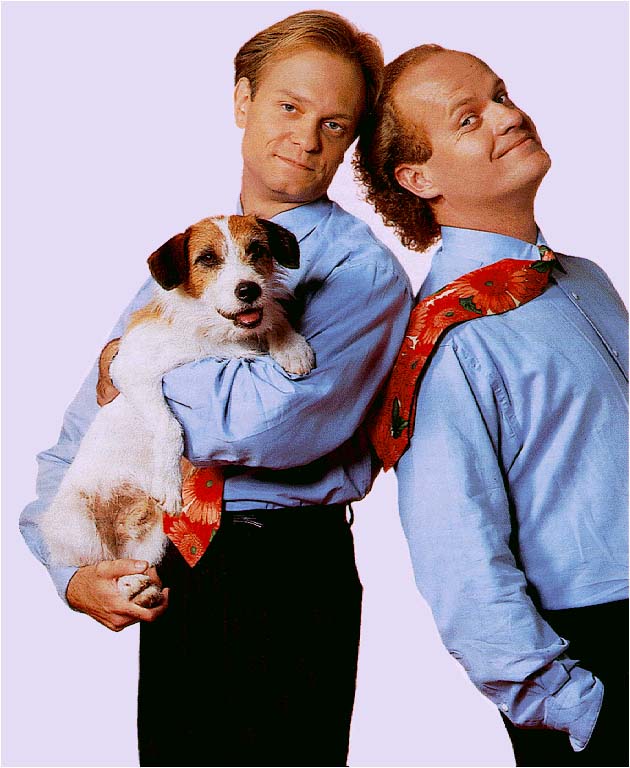
How Frasier came to be

FrasierOver on Ken Levine's blog guest poster and Frasier co-creator, Peter Casey, explains how the show came to be. There's a second post about the serendipitous casting and a third on how Lisa Kudrow almost got the part of Roz.
Our biggest struggle after filming the pilot was cutting it down to time. We were something like six minutes long, which is a lot. We cut and cut and cut some more. We cut things we liked and we cut things we loved. Still, after 6 or 7 passes at the show we were still a minute long. We felt we had cut it to the bare bones. Any more cuts could damage the show so we went to Paramount with our dilemma. Thankfully, they agreed with us and asked NBC to give us some extra time. After viewing what we hoped would be our final cut, NBC agreed to give us that extra minute which was a very big favor. So, how do they come up with that extra minute of programming time for us? Don'’t think that all they have to do is cut a commercial or two. Are you crazy? That'’s money. No, to give us that extra minute, they asked the three other comedies and one drama on that Thursday night to each cut 15 seconds out of their programs. It's not something that'’s done very often and it's not something the network likes to do, but for that pilot of Frasier they felt it was worth it.
Photo: David Hyde Pierce and Kelsey Grammer in Frasier, created by Peter Casey, David Lee and David Angell.

Thursday, December 07, 2006

TheFrontList.com

Much of the world of writing and publishing has remained almost proudly low-tech. Serious authors like Martin Amis and William Boyd avow a preference for pen and paper, while Paul Auster wrote a whole book in homage to his manual Olympia typewriter.

Amazon.com has successfully dragged the business of selling finished works into the Internet age, but the art of finding and shaping the next great novel has remained decidedly off-line.

"I got the feeling that publishers and agencies had been waiting for the Internet to change things but were never really sure how it was going to happen," said Tom Lodge, co-founder of Thefrontlist.com, a new Web site that aims to haul the process of editing and publishing into the 21st century.
More from Tara Mulholland for The International Herald Tribune.

TheFrontList.com works as a peer review site, with writers paying around £10 to read the critique of their work. Any author gaining over a certain points score from a review is guaranteed to be read by a respected agent or publisher.

Patriotism and sex

David Hare's new play The Vertical Hour has opened to mixed reviews on Broadway. You can get a taste of it first-hand in these extracts on patriotism and sex from one of the stars, Bill Nighy. Courtesy of The New York Times.

Howard Barker interview

In an audio interview for The Guardian's Theatre Blog, Lindesay Irvine talks to playwright Howard Barker whose play The Seduction Of Almighty God opens for a short run at The Riverside Studios on Saturday.

Money for pitching

When Geoff Rodkey ("Daddy Day Care," "RV") shopped around his idea for a "Scary Movie"-like parody of the family film genre back in mid-April, he was in a particularly strong position. It was two weeks before Sony's "RV" would open, and Rodkey was flush in Disney's good graces since his late rewrite of "The Shaggy Dog" was helping to push it toward $60 million at the domestic box office that week. When they heard his pitch, Sony, Disney and Dimension all expressed interest in the lush seven-figure range, until Disney executive Karen Glass and production president Nina Jacobson pocketed Rodkey's idea for a monstrous $1.25 million.
More from J.A. Fernandez in The LA Times.

The bad news for Rodkey is that Disney have dropped the project. The (not inconsiderable) good news is that he gets to keep the $1.25 million.

Wednesday, December 06, 2006

Jack Williamson obituary

With the death of Jack Williamson, at the age of 98, the last contact with the era of the American science fiction "pulp" magazines has been broken. Williamson was perhaps the greatest, and certainly the longest lived, of the writers who became prominent in the mass-market magazines of prewar days. Williamson's skills as a writer enabled him to outgrow that past, and for most of his later career he was recognised for his varied and subtle books, many of them written for young readers. Even when he was in his 90s, he was receiving awards for his fiction.
More from Christopher Priest in The Guardian.

If you'd like to know more about Williamson, there was an interview in Science Fiction Weekly a few years ago.

Tuesday, December 05, 2006

Five go to Disney

Walt Disney has made its largest commitment to a television production outside the US after striking a deal to develop a new animated series in the UK.

The deal to develop Enid Blyton’s Famous Five stories, comes as Disney moves away from its traditional model of exporting US-made content and towards producing more of its content in local markets.
More from Matthew Garrahan in The Financial Times.

In The Telegraph, Tom Leonard welcomes the news - even though the stories will be rewritten by American writers.
After the decades of demonisation heaped on Blyton – racist, sexist, smug-middle-class-ist, -ist, -ist, -ist – the fact that a media company as fearsomely politically correct as Disney has turned to them for inspiration is remarkable.

Gay farce

Whatever its faults, New York theatre has virtually patented a new form: the gay comedy of manners. Its origins lie in Mart Crowley's 1968 play The Boys in the Band, dealing with a surprise hetero visitor to a gay birthday bash. Crowley's work launched a series of plays that combined a gay agenda with mass audience appeal. In Britain, leaving aside Joe Orton's taboo-breaking farces, the only real equivalent is Kevin Elyot's My Night With Reg (1994). When will our own writers wake up to the fact that there is now a big market for gay boulevard comedy?
More from Michael Billington in The Guardian.

Plots are so 20th century

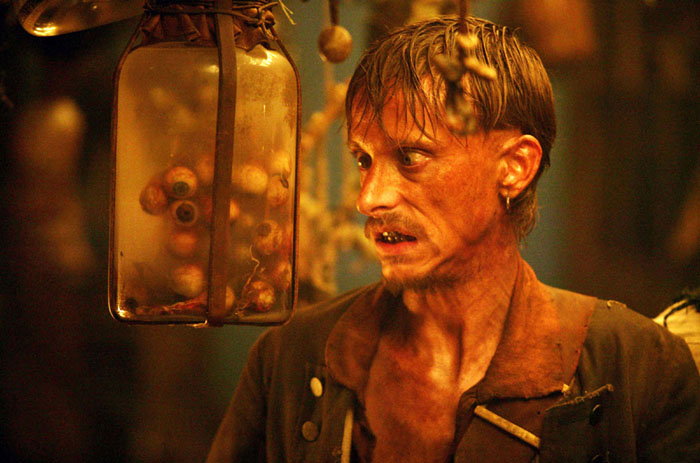
In The LA Times Dennis Lim argues that traditional story telling has taken a back seat in recent blockbuster films, Miami Vice (written by Michael Mann based on the TV series created by Anthony Yerkovich) and Pirates Of The Caribbean: Dead Man's Chest (written by Ted Elliott & Terry Rossio). The point of both films seems to be that narrative is beside the point.
In "Dead Man's Chest," which is not so much written as diagramed, plot points function simply as cogs in the lumbering machine. The ridiculous convolutions, which involve missing keys and magic compasses and Davy Jones' beating heart, serve only to catapult the movie from one exhausting, effects-heavy set piece to another.

Story is likewise reduced to pretext in "Miami Vice," which director Michael Mann shot on high-definition video (the same format that he and cinematographer Dion Beebe used for 2004's nocturnal Los Angeles thriller "Collateral"). At 134 minutes, the movie has barely more substance than an average episode of the TV series. The drug-running plot complications are a tangle of straight-faced clichés.
PiratesMackenzie Crook in Pirates Of The Caribbean: Dead Man's Chest

Monday, December 04, 2006

Digital Hollywood conference

I spent an afternoon at the Digital Hollywood conference in London last week and it was interesting to see how the terms of discussion about new media and broadcasting have changed in the last year or two.

As the last conference I went to on a similar theme, back in 2004, speeches were full of questions. Would TV on mobile phones ever take off? Could video on demand actually be made to work? Would the fear of piracy mean that producers and broadcasters resist all attempts to sell their wares online?

Now, all these questions have appear to have been answered. The take-up of broadband and the expansion of bandwith means that everyone seems to believe that the computer, in some form or another, will become the main access point to programming. Efforts to educate people away from piracy will still be made but fear of illegal copying won’t stop paid-for content going online. Mobile programming remains in its infancy, but for short form shows, trailers and clips it will become increasingly important.

Speakers at Digital Hollywood still expressed some caution. For example, it is predicted that in 2010 hard copy DVD rentals (mostly by post) will still outnumber online DVD delivery by 10:1. Consumers still have a lot of concerns about downloading feature films and the industry has important questions to address – for example, regarding the reluctance to allow people to download-to-own.

None of this will come as any surprise to anyone who pays any attention to the press. What is more interesting, perhaps, is what it might mean for the people who actually make the content. Like writers, for example.

The first concern is getting paid – and the Writers’ Guild in this country and America have made sure that writers’ rights are properly protected just as they were when the DVD market began to take off.

But, it seems to me, the development of digital distribution could have greater implications. Virtually every speaker I heard at Digital Hollywood spoke about “the studios”. The sign of success for any new project, be it video on demand or mobile TV, was that one or more of “the studios” had endorsed it. These studios are, of course, the big six players in Hollywood: Time Warner, Universal, Paramount, Fox, Disney and Sony. In this country you could add the BBC as a major player.

The question is whether, as online distribution of programming increases, content creators will need to rely on these media monoliths. It’s already possible to distribute content via YouTube or other similar sites and it seems only a matter of time before other sites, where content creators are paid, start to take off.

At Digital Hollywood one of the speakers provided an interesting model. Tim Sparke is managing director of Mercury Media, a company that, along with Aggregator TV, is setting up a new broadband documentary channel called joiningthedots.tv. He told the conference that he felt people had become bored with mainstream media and were looking to broadband for an alternative. When they launch next year, he hopes to attract around 15,000 subscribers. Not only will they be able to get a wide range of documentaries online, they will also be able to invest in programmes that have not yet been made – what Sparke calls “the democratisation of finance”.

No doubt similar sites for drama and comedy programming already exist somewhere on the web. Might they represent the real, revolutionary future of TV?

Clive Perry obituary

Clive Perry, who has died of cancer aged 70, was an important figure in British theatre - in Derby, Leicester, Edinburgh, Birmingham and Pitlochry - and devoted a large part of his career to encouraging creativity and radical experiment in actors, writers, technicians, and, above all, directors.

Perhaps his greatest contribution was to reinvent the role of the artistic director: rather than just being a director of plays, he was, in his own words, "a subsidised impresario", concentrating on the politics and business of running theatres, lifting responsibilities from his colleagues and providing them with the freedom and opportunity to hone their craft. He later passed on his knowledge as the first professor of drama at Queen Margaret University College (QMUC), Edinburgh.
More from Peter Farago in The Guardian.

Friday, December 01, 2006

The Poetry Archive

The Poetry Archive celebrated its first anniversary today, unveiling on its website a selection of newly-recovered historic recordings of poets from Siegfried Sassoon to Stevie Smith.

Members of the Poetry Archive worked closely with staff at the BBC to retrieve the remarkable recordings, many of which were believed to have been lost forever. Sassoon, who already featured on the website reading 'The Dug-Out', can now be heard reading 'Everyone Sang', a poem celebrating Armistice Day which ranks among the best-known of his works.
More from Sarah Crown in The Guardian.

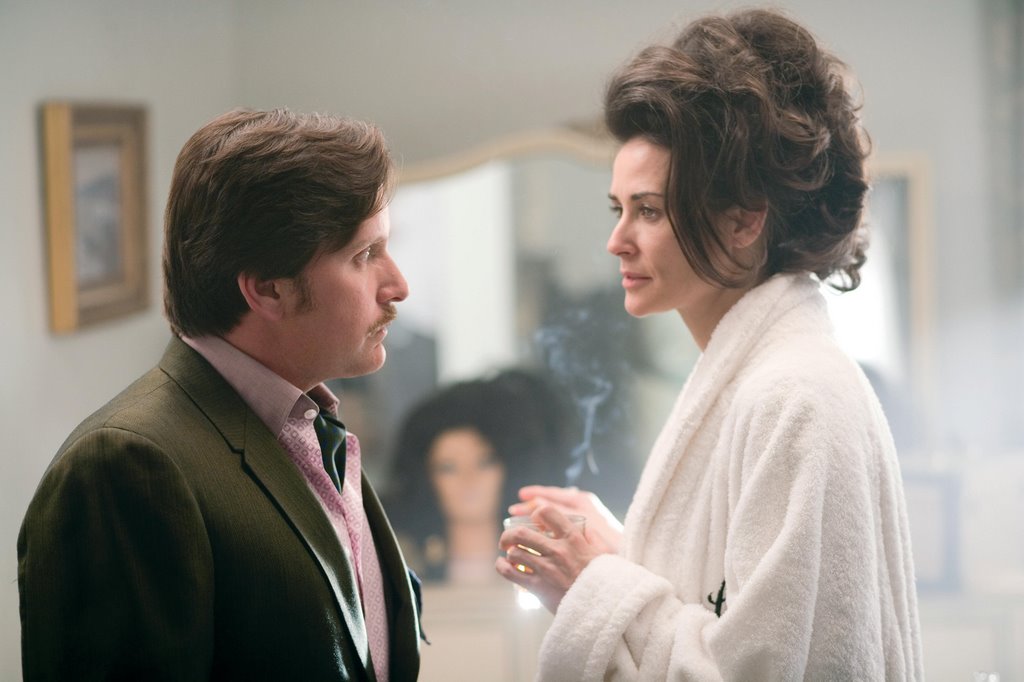
Emilio Estevez interview

For the Writers Guild of America, west, Dylan Callaghan talks to Emilio Estevez about Bobby, his first film as writer-director.
When you started this script, I read that you got terribly stuck at about 30 pages. Your brother then encouraged you to finish it, so you rented a cheap motel room off the 101 freeway where it turned out the desk clerk was a woman who was at the Ambassador rally the night Bobby Kennedy was killed?

It's absolutely true. Her name was Dianne. I interviewed her three times during the three weeks that I stayed there. She had married two young men to keep them from going to Vietnam. She had spent that day canvassing out in Glendale and Pasadena and was in the ballroom for the victory speech. She heard the shots and said it was as if the rug had been pulled out from underneath an entire generationĂ‚… I think that's a pretty accurate description of what happened after that night.

BobbyEmilio Estevez and Demi Moore in Bobby, written and directed by Emilio Estevez (Photo © 2006 The Weinstein Company)

Missing Believed Wiped

Kevin Young, for BBC News, reveals how 'lost TV classics' are tracked down by archivists at London's National Film Theatre.
Sometimes restoration is tricky, [archivist] Mr [Dick] Fiddy says, picking a programme being screened on Saturday as an example.

"Out of the Trees was a pilot - intended to go to a series - written by Douglas Adams and Graham Chapman, starring many of the people that would go on to be in the Hitchhiker's Guide to the Galaxy.

"It went out, but was junked almost immediately afterwards.

"It had been recorded by Chapman at home on a very old-fashioned, primitive video machine.

"Recently, his long-term partner, David Sherlock, mentioned to me that he had this old tape, and could we play it."

It took two years to transfer because a customised player had to be built, Mr Fiddy says, with the entire process filmed in case the tape "dissolves after one play".

Thursday, November 30, 2006

Blogging playwrights

For your consideration, as they say in Hollywood, some new (to me) blogs by playwrights:

Remembering St Elsewhere

As a new DVD set is released, David Browne in The New York Times reflects on the significance of St Elsewhere.
Once upon a time in network television, hospitals were reassuring places: clean, well-lighted fortresses where one could be comforted by cheery nurses and treated by doctors either grandfatherly...or blandly strapping... These days the TV hospital is anything but a sanctuary. As “ER,” “House” and “Grey’s Anatomy” attest, assaults and bombings are as common as operations, and the staff members are as likely to be dissecting one another’s sex lives as tending to patients.

The missing link between medical shows then and now was “St. Elsewhere,” which ran from 1982 to 1988 on NBC and whose first season will be released on DVD this week. In the series, set in the shabby St. Eligius hospital in a destitute section of Boston, everything was in hectic, chaotic motion. Doctors, nurses and sometimes patients crossed paths or nearly collided in the corridors; files always seemed to be spilling onto floors.

Wednesday, November 29, 2006

Five writers: one play

It might not be the sexiest word in the English language, but just now "collaboration" has British theatre buzzing. Directors are collaborating with artists, musicians and choreographers to create work that is experimental and vibrant. Actors are seizing control of the stage and devising work themselves. About the only people who aren't doing much collaborating are playwrights.

Which is why Catch, a new play by five writers opening this week at the Royal Court in London, is such a tantalising prospect. Working together wasn't their idea. As one of them, April de Angelis, puts it: "Nobody would seriously think: 'What a good idea, to write with four other people.'" The idea was suggested by Ian Rickson, outgoing artistic director at the Royal Court. It came to him when raking through the theatre's archives for the theatre's 50th anniversary. A similar collaboration took place at the Court in 1971 between seven young men, including David Hare, Howard Brenton and Stephen Poliakoff. The group's aim then was to break out of fringe theatres into "establishment" spaces. The play, Lay By, succeeded in kickstarting their careers.
More from Maddy Costa in The Guardian.

Tuesday, November 28, 2006

Tensions in Hollywood

In a development that underscores the deteriorating state of labor relations in Hollywood, the chief negotiator for the major studios Monday accused the union that represents TV and film writers of jeopardizing production by rejecting his request to enter early contract talks.

J. Nicholas Counter, president of the Alliance of Motion Picture Television Producers, said his offer to begin negotiations in January had been spurned by David Young, executive director of the Writers Guild of America, West. Instead, Counter said, Young proposed beginning talks in September, just before the writers' contract expires Oct. 31.

"We've been rebuked," Counter said.
More from Richard Verrier in The LA Times.

There's no comment yet from the WGAw.

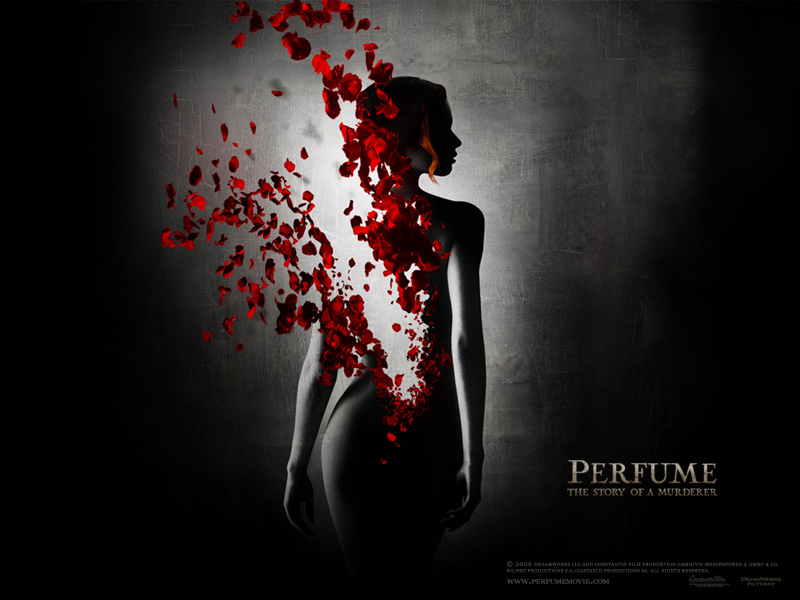
Getting Perfume on screen

Perfume
"Perfume: The Story Of A Murderer,” Patrick SĂĽskind’s seductive novel about the power of scent, was first published in Germany and went on to sell 15 million copies around the world. For its many fans the evocative tale lingered like the bottom note of a fragrance. But it took 21 years to find its way onto screens.
More from Coeli Carr in The New York Times.

Monday, November 27, 2006

Mark Ravenhill's Dick Whittington

Dick Whittington
Playwright Mark Ravenhill wants to make one thing clear: "The posters for Dick Whittington say it's a family pantomime, and that's exactly what it is." Ever since it was announced that the 40-year-old author, whose 1996 debut Shopping and F***ing was full of explicit sex and violence, would be writing a Christmas panto, he's been plagued by innuendo.

"I've been harassed by all these media types," says Ravenhill, "saying nudge, nudge, wink, wink, I bet it's got anal sex in it. Well, actually, no it hasn't. It's a family pantomime.
"More from Aleks Sierz in The Telegraph.

Update: More from Ravenhill in The Guardian.

Another update: Still more in The Independent.

Children's BAFTAs

The winners of the BAFTA awards for Children's TV and film were announced last night. Notable winners included:
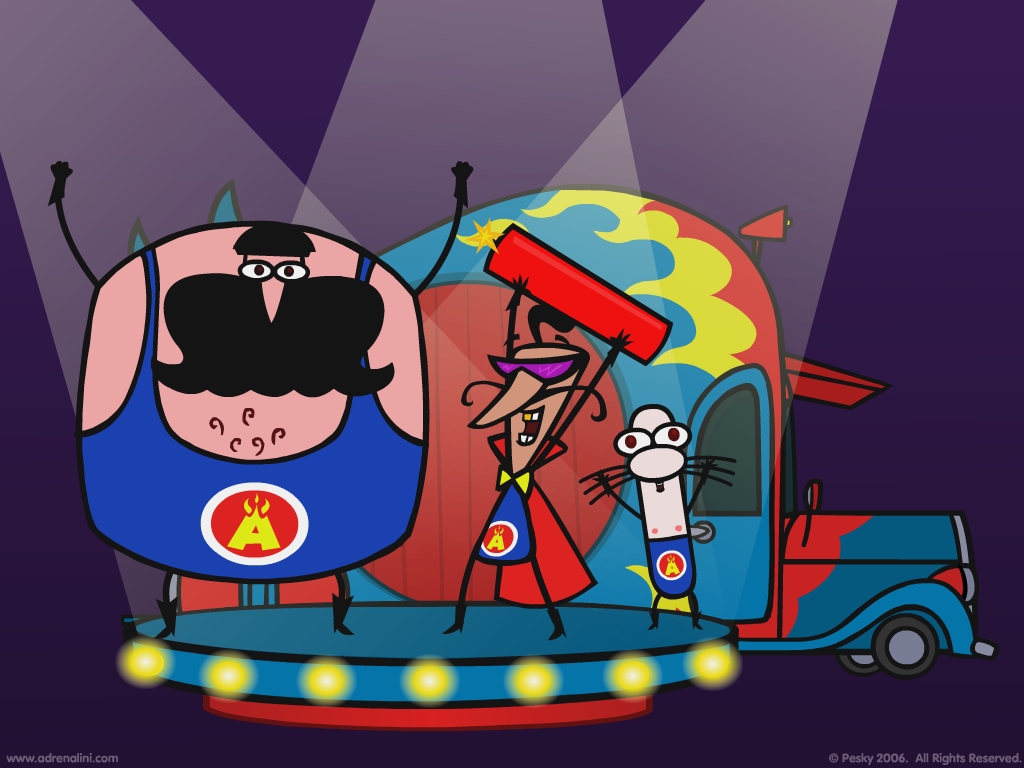
  • Best Animation: The Amazing Adrenalini Brothers (written by Mark Huckerby, Nick Ostler)
  • Best Pre-School Animation: Pocoyo (written by P. Kevin Strader and
    Andy Yerkes)
  • Best Drama: The Giblet Boys (written by Nick Fisher)
  • Best Feature Film: Wallace And Gromit: The Curse Of The Were-Rabbit (written by Nick Park, Bob Baker, Steve Box, Mark Burton)
  • Best Writer: Peter Tabern (Johnny And The Bomb, based on the book by Terry Pratchett).
Adrenalini BrothersThe Amazing Adrenalini Brothers: Directed by Dan Chambers and Claire Underwood, written by Mark Huckerby and Nick Ostler)

Theatrevoice.com

Theatrevoice.com hosts an extensive archive of articles and broadcast interviews about theatre.

Thanks to Maxie Szalwinska in The Guardian for the link.

Nimer Rashed wins Ustinov award

British writer Nimer Rashed has won the 2006 Sir Peter Ustinov Television Scriptwriting award for his script The Great McGinty. The award, run by the organisation behind the Emmy's, is open to non-US citizens living outside the US who are under 30.

In addition to receiving a cheque for $2,500, Nimer's script will be performed by a group of professional New York actors at the International Emmy World Television Festival before an audience of worldwide television executives.

In the early 90s Nimer acted professionally on stage and screen. In 2006, his play Itchycoo Park won 2nd place at Soho Theatre’s Westminster Prize and was performed at the theatre. He has had further readings at the Soho Theatre, and is currently on the Young Writers Programme at the Royal Court. His fiction has appeared in Transmission and on Pulp Net.

Friday, November 24, 2006

Unsolicited material welcome

If you're looking for somewhere to send a screenplay, writer and blogger Danny Stack has put together a list of companies who say they'll read it.

Betty Comden obituary

Betty Comden, who with her longtime collaborator Adolph Green wrote the lyrics and often the librettos for some of the most celebrated musicals of stage and screen, died yesterday in Manhattan. She was 89 and lived in Manhattan...

During a professional partnership that lasted for more than 60 years, and which finally ended with Mr. Green’s death in 2002, the Comden-Green blend of sophisticated wit and musical know-how lit up stage shows like “On the Town,” “Wonderful Town,” “Peter Pan” and “Bells Are Ringing.” Their Hollywood credits included the screenplays for two landmark film musicals, “Singin’ in the Rain” and “The Band Wagon.”
More from Robert Berkvist in The New York Times.

Musicals and syphilis

Evening Standard critic Kieron Quirke sees encouraging signs for new playwrighting:
It seems serious plays are being outdone by musicals as never before in the West End...This is a great thing. The two golden periods of the commercial musical, which we might name separately after Rodgers and Hammerstein and Andrew Lloyd Webber, both preceded similarly gilt eras for British new writing, respectively the English Stage Company’s revolution of the 50s and the ‘in yer face’ revival of the 90s. You have to overdose on sugar before you get the insulin.

But my second submission is stronger still. Syphilis is back! Incidents are up nearly 3000% since the early 90s. History has taught us one thing: where syphilis goes, great literature follows, and theatre in particular sees a benefit.

Thursday, November 23, 2006

A screenwriters' roundatble

When a round table of screenwriters assembled at the swanky Viceroy hotel in Santa Monica back in May to look over the "Transformers" screenplay, it may not have had the solemn purpose of King Arthur's knightly conferences nor the savage wit of Dorothy Parker's vicious circle, but it did portend something significant.

While bringing in a group of writers to brainstorm on a project is relatively common in television and feature comedies and animated films, especially early in the development process, big studio action movies like this one — born of the original mid-'80s television cartoon series — rarely get this kind of treatment.
More from Jay A. Fernandez for the LA Times.

Abi Morgan interview

In The Guardian, Gareth McLean talks to Abi Morgan about her new TV film, Tsunami: The Aftermath.
Morgan spent 10 days in Thailand researching the project, speaking to hundreds of people, in NGOs and the Thai government. Would she describe Tsunami: The Aftermath as a docudrama? "When I think of docudrama, I think of timelines flashing up on the screen and often more sketchily written characters. Part of the need and the desire to make Tsunami a fiction was that you can't do justice to an individual story. You can't fulfil what someone would want you to, so I told an amalgam of stories. But there's nothing in there that isn't based on fact, even the most shocking events."
Tsunami: The Aftermath is on BBC2 on Tuesday November 28.

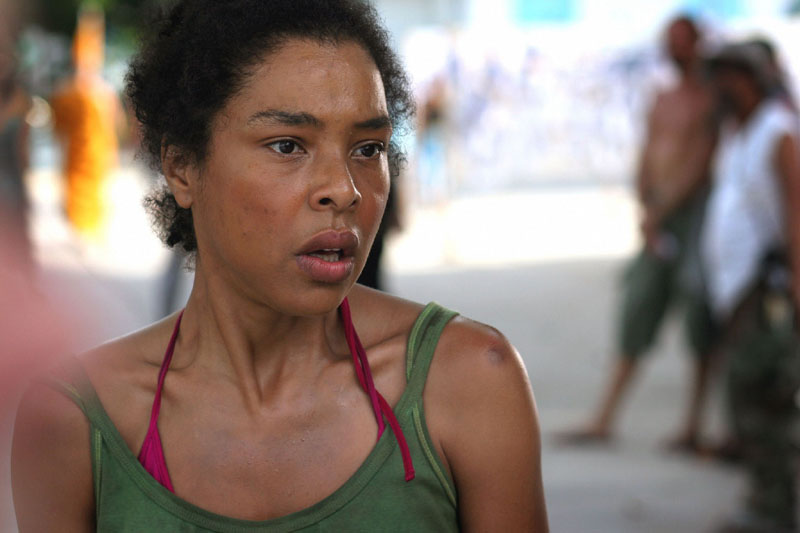
Tsunami:The AftermathSophie Okonedo in Tsunami: The Aftermath, written by Abi Morgan, directed by Bharat Nalluri. Photo by Kerry Brown for BBC/Kudos Film and Television

Wednesday, November 22, 2006

RSC backs new writing

The Royal Shakespeare Company, keeper of the flame of the greatest playwright ever, plans to "knock Shakespeare off his podium", according to artistic director Michael Boyd, by increasing the proportion of new plays it stages to half of its total work.

"What is distinctive about the Royal Shakespeare Company is the relationship between the Renaissance and writing now," said Mr Boyd. "What excites me is the tension line between the 16th century and the present. New plays are more important than classical revivals."

The playwrights Marina Carr, Leo Butler and Roy Williams have all been recently commissioned by the RSC. But in a more far-reaching move, writers will be "embedded" within the company. The first of these, Adriano Shaplin, will be working with the actors who are preparing Shakespeare's history plays, all eight of which will be in the repertoire by spring 2008. The idea is for authors to write plays with a specific ensemble in mind, just as Shakespeare did. "It's a radical idea; but it is also our heritage," Mr Boyd said.
More from Charlotte Higgins in The Guardian.

New Welsh theatre company

Wales’ new theatre company, created by the merger of Sherman Theatre with Sgript Cymru, has appointed former Arts Council of Wales chief executive Emyr Jenkins at its first chairman and Chris Ricketts as its inaugural director.

The pair will lead the organisation, currently trading as the Contemporary Theatre and New Writing Company, when it becomes fully operational from April 1, 2007.
More from Alistair Smith in The Stage.

Tuesday, November 21, 2006

British shows win at International Emmy's

British drama and comedy had a good night at the International Emmy Awards in New York. British winners included:
  • Children And Young People: Sugar Rush, written by Katie Baxendale, based on the novel by Julie Burchill
  • Comedy: Little Britain, written by Matt Lucas and David Walliams
  • Documentary: Hiroshima, written and directed by Paul Wilmshurst
  • Drama Series: Life On Mars, created by Matthew Graham, Ashley Pharoah and Tony Jordan.
Ray Winstone won the prize for Best Actor for his role as Vincent in the series of the same name, created and written by Stephen Butchard.

Sugar RushLenora Crichlow and Olivia Hallinan in Sugar Rush, written by Katie Baxendale, based on the novel by Julie Burchill

Nelson S Bond obituary

Although his name has since slipped from recognition, Nelson S Bond's byline on a magazine was a guarantee of a good story in the 1930s and 1940s. A prolific and often humorous writer, Bond, who has died at the age of 97, was at his best with the short story, once explaining: "One of my axioms of writing has always been that good stories are not written - they're rewritten. I would talk a story into the dictaphone, Betty [his wife] would type it, then I would revise it. The story had to be packed tight together. So I was fair at 10,000 words, good at 5,000 words, and excellent, sometimes, at 2,500. The shorter the Bond, the better the story."
More from Steve Holland in The Guardian.

BBC Vision launched

Jana Bennet, the BBC's Director of Vision (really!) has launched BBC Vision, "the biggest integrated multimedia broadcast and production group of its kind in the world."
"Our creative purpose is to deliver great programmes and great content to all our audiences… The future will still be a place where audiences value great storytelling, elegant structure, high production values – all the traditional strengths of BBC programme makers. But at the same time we need to develop fresh ways of thinking and using technology. There are incredible opportunities in this new world if we can only organise ourselves to seize those opportunities and make them work for our audiences."


The press release states that BBC Vision is "so called because it makes BBC content that people watch".

It brings together several former BBC divisions: Drama, Entertainment and Children's; Factual and Learning; Television; and Network Production in the Nations.


This follows a restructure plan announced by BBC Director-General Mark Thompson earlier this year.

Bradwell leaves The Bush

Mike Bradwell has announced that he will step down as artistic director of The Bush Theatre next year, after more than ten years in the job...The Bush’s board will shortly be advertising for a replacement artistic director to lead the theatre’s planned move into a larger building.
More from Nuala Calvi in The Stage.

Monday, November 20, 2006

Tony Jordan's ITV double

EastEnders uber-writer Tony Jordan has won a double commission from ITV, reports Jason Deans for Media Guardian (free registration required).
Moving Wallpaper, for ITV1, is a single-camera comedy drama set behind the scenes at a new soap, Echo Beach, which will be broadcast on the same night on ITV2. Echo Beach will be set in a Cornish resort.

Taking a cue from the scheduling of big reality TV event shows such as I'm a Celebrity, Get Me Out of Here!, Moving Wallpaper and Echo Beach will be broadcast in tandem each night for two weeks, either late next year or in early 2008.

The idea, which is still in the early planning stages, is for ITV1 viewers to watch the behind-the-scenes shenanigans of Moving Wallpaper on ITV1, then switch over to ITV2 for the front-of-camera scenes in Echo Beach.

Bond writers

Casion RoyaleRobert Wade and Neal Purvis who, along with Paul Haggis, wrote the new Bond film, Casino Royale, talk to Vincent Dowd for BBC News.
Surely one of the problems with Bond has always been he remains essentially the same throughout the movie? That can get dull.

Purvis - But Casino Royale gives you the opportunity for a proper arc to his character. He changes from the beginning to the end. He's very young, raw, out of control almost.

Wade - What you have with the Bond movies is this character gliding over everything. The fact nothing touches him is why we all want to be him. But it also makes him a sort of superman who in the end you don't really relate to.

This time you'll see someone who gets completely broken down and has to rebuild himself. He forges the steel of his character through the emotional turmoil he goes through. So we end up with a character who has a kind of moral compass - and I think from here on you'll feel Bond is denying his own emotions.
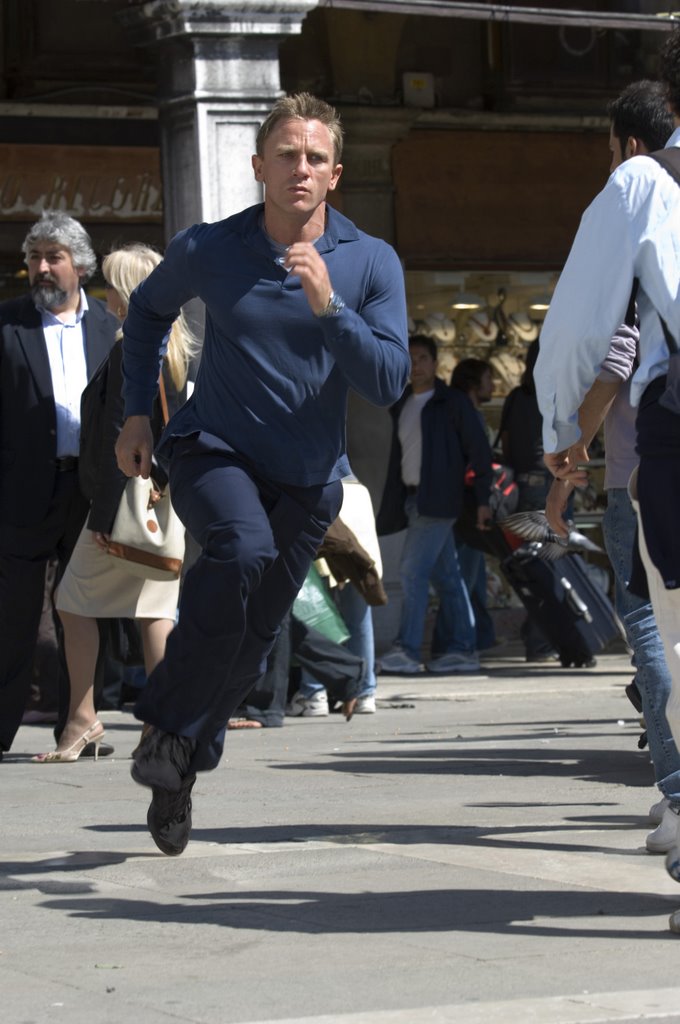
Photo: Daniel Craig in Casino Royale, screenplay by Robert Wade and Neil Purvis & Paul Haggis, from the novel by Ian Fleming, directed by Martin Campbell.

London To Brighton

Hang out with would-be filmmakers in Britain for any period of time and you'll hear a familiar litany of woes – all under the heading about how awfully difficult it is to get a film made.

Funding bodies, you'll hear, are conservative and over-cautious, ruinous changes to scripts are routinely demanded, and money is grindingly slow to come through. Some filmmakers become so demoralised, they simply give up.

Yet a startling new British film, London to Brighton, stands as a beacon of hope. It was shot on a shoestring £80,000, raised from private investors, by a young production team. Its script, by first-time writer-director Paul Andrew Williams, remained essentially unchanged. It opens in Britain in two weeks' time.

"We shot it under the radar, so to speak," says producer Rachel Robey, 30. "That was the plan – to make it quickly and quietly, with confidence in the script and the director."
More from David Gritten in The Telegraph.
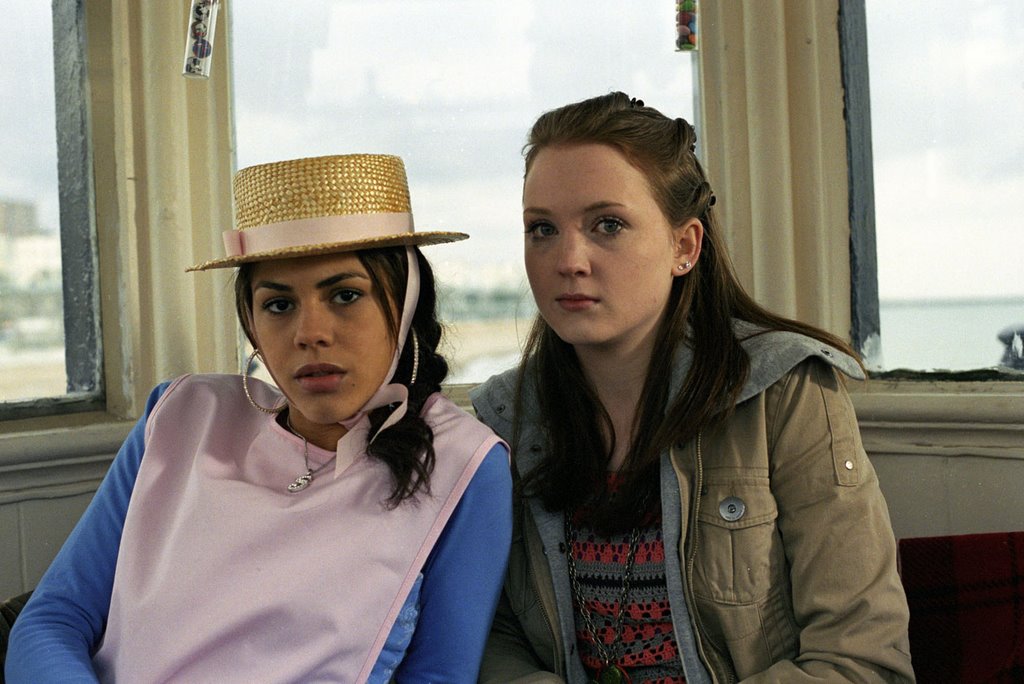
London To BrightonLorraine Stanley (left) and Georgia Groome in London To Brighton, written and directed by Paul Andrew Williams.

Independent book shops

For a self-published author, writes Iqbal Ahmed in The Independent, independent book shops can be your only route to an audience.
I discovered an unspoken fraternity among the independent booksellers of London. When I went to deliver copies of my book to Newham Bookshop one afternoon, Vivian Archer picked up the phone and called Eastside Books for me. They were happy to stock my book on Vivian's recommendation. Similarly, Mary in Prospero's Books introduced me to Muswell Hill Bookshop. It took me just ten months to sell out the first edition of my book.

Friday, November 17, 2006

Ofcom bans junk food ads on kids TV

The communications industry regulator, Ofcom, has decided that advertising for junk food should be banned on kids TV. While health campaigners will be pleased, it's another blow for the beleaguered commercial children's TV sector, especially ITV.

There's comment and analysis from Mark Sweney for Media Guardian.

Anne Cofell Saunders interview

In Creative Screenwriting, Jeffrey A. Dobberpuhl talks to Anne Cofell Saunders about writing for Battlestar Galactica and 24.
The pace is the most difficult part of the job. It's not just trying to be creative and excellent, but it's trying to do it on cue. That's the hardest part. "Be brilliant now!" Someone points their finger at you and you have to perform in that moment. Whether you are turning in a script on time or you are in the room and Ron Moore is pacing the room and he turns to you and says, "What do you think?" you want to be brilliant. These are the hardest moments, to perform on cue to a high standard of excellence.
Battlestar Galactica Battlestar Galactica, Season Three. Shown in the UK on Sky One.

ITV looking for new daytime soap

Despite the abject failure of Crossroads mark two and the ill-fated Night and Day, ITV is again planning a move back into daytime soap and has compiled a shortlist of ideas for a new long-running series.

It is understood that the commercial broadcaster has shortlisted four or five production companies following a tender document it sent out during the summer for a new show aimed at a slightly older female audience.
More from Leigh Holmwood for Media Guardian (free registration required).

The revived Crossroads really was awful. Night And Day at least tried something different but it never really found its feet. The models to follow for daytime soaps, in my opinion, are Neighbours and Home And Away. They're often ridiculed but in fact they're tightly plotted, well acted and well written. Plus, they get excellent ratings.

Named and shamed

If a character you create has the same name as a real person you could be in trouble, says John Sutherland in The Guardian. Take Jake Arnott's latest novel,Johnny Come Home:
In his narrative, set in London's tin pan alley in the 70s, Arnott introduced a character called Tony Rocco: a one-time big-band singer, now an impresario and a big-time pervert in the Harry Starks mould. Nasty. Alas, out of obscurity, escorted by his learned friends in wigs, emerges the real-life Tony Rocco: former big-band singer and a figure of unimpeachable respectability.

Exit the book. Exit, also, many thousands of pounds from the coffers of Arnott's publishers, Hodder and Stoughton.